Updated: January 24, 2025 | by Sarah Mitchell, Licensed Insurance Adjuster & Consumer Advocate | Reading Time: 17 minutes
Quick Answer: Does homeowners insurance cover winter storm damage? In most cases, yes. Standard homeowners insurance policies cover damage from wind, snow, ice, hail, and freezing temperatures—including roof damage, fallen trees, frozen pipes, and ice dams. According to the Insurance Information Institute, winter storms cause billions of dollars in insured losses annually across the United States. However, flood damage from snowmelt is typically excluded and requires separate coverage. Understanding exactly what your policy covers before a storm hits can mean the difference between a smooth claim and a frustrating denial.
The February Storm That Changed Everything
I’ll never forget February 2021. I was working as a claims adjuster in Texas when Winter Storm Uri hit, and nothing in my fifteen years of insurance experience had prepared me for what I was about to see. In one week, I personally reviewed over 200 claims—more than I’d typically handle in three months.
The images from those claims still haunt me. A young couple in Austin who woke up to water pouring through their ceiling at 3 AM when their upstairs pipes burst. An elderly woman in Houston whose entire first floor was destroyed by flooding after her water heater exploded from the freeze. A family in Dallas whose roof collapsed under the weight of ice they never thought would accumulate in Texas.
But what haunts me more were the denials I had to process. Homeowners who thought they were covered, only to learn their policy had exclusions they’d never noticed. Families who waited too long to file claims or didn’t document damage properly. People who made simple mistakes that cost them tens of thousands of dollars.
That experience drove me to start educating homeowners about winter storm coverage before the storms hit—not after. Because by then, it’s often too late to fix the gaps in your protection. So let’s dive into what you really need to know about whether does homeowners insurance cover winter storm damage applies to your situation.
For a complete understanding of what your policy includes, start with our comprehensive homeowners insurance guide.
Does Homeowners Insurance Cover Winter Storm Damage: The Complete Answer
Let me give you a straightforward answer to the question everyone asks: does homeowners insurance cover winter storm damage? The short answer is yes—but with important caveats that can make or break your claim.
How Standard Homeowners Insurance Applies to Winter Storms
- Dwelling coverage (Coverage A): Pays for damage to your home’s structure from covered perils like wind, ice, snow, and freezing.
- Other structures coverage (Coverage B): Covers detached garages, sheds, and fences damaged by winter storms.
- Personal property coverage (Coverage C): Replaces belongings damaged by covered winter storm events.
- Loss of use coverage (Coverage D): Pays for temporary housing if your home becomes uninhabitable after storm damage.
According to the National Association of Insurance Commissioners (NAIC), a standard HO-3 homeowners policy covers your dwelling against “all risks” except those specifically excluded. Winter storms aren’t excluded—meaning most storm damage is covered by default.
However, the devil is in the details. The type of damage, how it occurred, and whether you took reasonable precautions all affect whether your claim will be approved. I’ve seen identical damage scenarios result in full payment for one homeowner and complete denial for another—based entirely on how the claim was filed and documented.
Does Homeowners Insurance Cover Winter Storm Damage in All States?
Coverage applies nationwide, but regional factors matter. In states that regularly experience severe winters—Minnesota, Michigan, Wisconsin, upstate New York—insurers have more experience processing winter claims efficiently. In states where winter storms are rare, like Texas or Georgia, claims can be more complicated because adjusters may be less familiar with cold-weather damage patterns.
The National Weather Service tracks winter storm data that can help document storm severity for your claim. Their historical records can prove that conditions in your area were legitimately extreme—useful if an adjuster questions whether damage was truly storm-related.
What Winter Storm Damage Is Covered by Homeowners Insurance
Understanding exactly what’s covered helps you document damage correctly and set realistic expectations. Here’s a comprehensive breakdown based on standard policy language and my experience processing thousands of winter storm claims.

Winter Storm Damage: What’s Typically Covered
| Type of Damage | Covered? | Notes |
|---|---|---|
| Roof damage from snow/ice weight | Yes | Includes collapse and structural damage |
| Frozen/burst pipes | Usually Yes | Must show reasonable precautions taken |
| Ice dam water damage | Yes | Interior damage covered; removal may not be |
| Fallen trees on home | Yes | Usually includes removal up to policy limits |
| Wind damage to siding/windows | Yes | Standard covered peril |
| Hail damage | Yes | May have separate hail deductible in some states |
| Power surge from storm | Usually Yes | May need to prove surge was storm-related |
| Food spoilage from power outage | Often Yes | Usually limited to $500 or less |
Frozen Pipe Coverage: The Most Common Winter Claim
Frozen and burst pipes are by far the most common winter storm claim I process. According to the Insurance Information Institute, water damage from frozen pipes costs U.S. insurers an estimated $1 billion annually.
Here’s what most homeowners don’t realize: your policy likely has language requiring you to “maintain heat in the building” or “shut off the water supply and drain all systems and appliances” when you’re away during freezing weather. If you left for vacation, turned the heat off completely, and pipes burst—your claim could be denied for failure to take reasonable precautions.
I had a client in Ohio—a snowbird who spent winters in Florida—whose entire home flooded when pipes burst in January. She had turned her thermostat down to 45°F to save on heating. The claim was denied because 45°F wasn’t considered adequate protection for pipes in exterior walls during a -15°F cold snap. Her $47,000 in damage was completely out of pocket.
For details on protecting your home while you’re away, read our guide on insurance for vacant and seasonal homes.
Ice Dam Damage Insurance Coverage: What You Need to Know
Ice dam damage insurance coverage is one of the most misunderstood aspects of winter storm claims. Let me break down exactly what’s covered, what isn’t, and how to document ice dam damage correctly.
Understanding Ice Dam Damage Insurance Coverage
- Water damage from ice dams: Covered—when ice dams force water under shingles and into your home, the resulting interior damage is typically covered.
- Damaged shingles and roofing: Covered—if ice dam formation physically damages roofing materials.
- Ruined insulation: Covered—wet insulation caused by ice dam leaks is included.
- Mold from ice dam moisture: Often covered—but may be subject to mold-specific limits in your policy.
- Ice dam removal: Usually NOT covered—this is often considered maintenance rather than damage.
When I was living in Vermont in my twenties, I watched my neighbor spend a full weekend on his roof with a roof rake after every snowfall. I thought he was being obsessive. Then I bought my own home and learned about ice dams the hard way—$8,500 in damage when water backed up under my shingles and soaked through my upstairs ceiling. My insurance covered the interior damage, but I paid $1,200 out of pocket for ice dam removal because that wasn’t considered a covered loss.
How to Document Ice Dam Damage for Your Claim
For ice dam damage insurance coverage claims to succeed, documentation is everything. The American Red Cross winter preparedness guide recommends keeping an emergency kit that includes a camera or smartphone for documentation.
- Photograph the ice dam itself before any removal work.
- Document water stains on ceilings and walls with close-up and wide-angle shots.
- Take photos of any visible mold growth immediately—mold spreads quickly.
- Keep receipts for any emergency repairs or temporary measures.
- Get a written estimate from a roofing contractor identifying ice dams as the cause.
What Winter Storm Damage Is NOT Covered
Understanding exclusions is just as important as knowing what’s covered. Here’s where does homeowners insurance cover winter storm damage gets complicated—because some damage that looks storm-related actually falls outside your policy.
Common Winter Storm Exclusions
- Flood damage: Melting snow that floods your basement is NOT covered—you need separate flood insurance.
- Ground movement: Frost heave damaging your foundation is typically excluded.
- Wear and tear: If an old roof finally fails during a storm, the pre-existing deterioration isn’t covered.
- Neglect: Damage that could have been prevented with reasonable maintenance.
- Gradual damage: Slow leaks that develop over time, even if worsened by winter weather.
- Sewer backup: Unless you have a specific endorsement for sewer/drain backup coverage.
- Damage while vacant: Many policies exclude or limit coverage if the home has been vacant for 30-60+ days.
The flood exclusion trips up more homeowners than anything else. I remember a family in New Jersey after a major March snowstorm—when temperatures rose quickly and all that snow melted, their basement took on 18 inches of water. They assumed it was covered because the snow came from a winter storm. It wasn’t. Snowmelt flooding is flood damage, and they didn’t have flood insurance. Their $35,000 claim was denied entirely.
According to FEMA’s flood insurance resources, flood damage requires a separate National Flood Insurance Program (NFIP) policy or private flood insurance. Your homeowners policy won’t cover it, no matter how the flooding occurred.
To understand whether you need additional coverage, check out our article on flood insurance basics and requirements.
How to File a Winter Storm Insurance Claim Successfully
Knowing how to file a winter storm insurance claim correctly can mean the difference between full reimbursement and a denied or underpaid claim. After reviewing thousands of claims, I’ve identified the exact steps that lead to successful outcomes.
How to File a Winter Storm Insurance Claim: Step-by-Step
- Prevent further damage immediately: This is a policy requirement. Cover broken windows with plastic, shut off water to burst pipes, and tarp damaged roofs if safe to do so.
- Document everything before cleanup: Take photos and videos of all damage from multiple angles. Include wide shots and close-ups.
- Contact your insurer promptly: Most policies require “prompt” notification. Call within 24-48 hours if possible.
- Keep all receipts: Emergency repairs, hotel stays, meals—anything you spend due to the damage.
- Get multiple repair estimates: At least two to three written estimates from licensed contractors.
- Meet the adjuster in person: Walk through the damage with them and point out everything, including hidden damage.
- Review the settlement offer carefully: Don’t accept immediately—you have the right to negotiate or dispute.
How to File a Winter Storm Insurance Claim: Documentation Tips
The Consumer Financial Protection Bureau recommends creating a home inventory before any disaster strikes. But if you haven’t done that, here’s how to document effectively after the fact:
- Video walkthrough with narration explaining what you’re seeing.
- Timestamped photos (most smartphones do this automatically).
- Written inventory of damaged items with estimated values and purchase dates if known.
- Copies of receipts or credit card statements for expensive damaged items.
- Contractor reports identifying storm damage versus pre-existing issues.
For more detailed guidance on the claims process, see our guide on how to file a homeowners insurance claim.
Why Winter Storm Insurance Claims Get Denied
Understanding why winter storm insurance claims get denied helps you avoid the mistakes that lead to rejection. In my career, I’ve seen patterns emerge—the same errors happening over and over again.
Why Winter Storm Insurance Claims Get Denied: Top Reasons
| Denial Reason | What It Means | How to Prevent It |
|---|---|---|
| Pre-existing damage | Insurer claims damage existed before storm | Keep dated photos of home in good condition |
| Lack of maintenance | Roof or systems were deteriorated | Keep maintenance records, get annual inspections |
| Failure to mitigate | Didn’t prevent further damage after storm | Take immediate action, document what you did |
| Flood damage | Snowmelt flooding isn’t covered | Purchase separate flood insurance |
| Late filing | Claim filed outside policy timeframe | Report damage within 24-48 hours |
| Insufficient documentation | Not enough proof of damage or cause | Over-document everything immediately |
| Vacant home exclusion | Home was empty for 30-60+ days | Get vacant home endorsement if applicable |
The “lack of maintenance” denial is particularly frustrating because it’s often subjective. I’ve seen adjusters deny claims by pointing to a few missing shingles or minor flashing issues and claiming the roof was “in disrepair.” That’s why winter storm insurance claims get denied more often than they should—and why having documentation of your home’s condition before the storm matters so much.
The USA.gov state insurance directory can help you find your state’s insurance regulator if you believe a denial is unfair.
Denied Winter Storm Insurance Claim Help: What to Do Next
If you’re reading this section, you may already be dealing with a denial. Don’t lose hope—denied winter storm insurance claim help is available, and many initially denied claims are eventually paid after proper appeal.
Denied Winter Storm Insurance Claim Help: Your Action Plan
- Request a written denial explanation: You have the right to know exactly why your claim was denied, with specific policy language cited.
- Review your policy carefully: Read the actual exclusion they’re citing. Sometimes adjusters misapply exclusions.
- Gather additional evidence: Get independent contractor opinions, weather data, and any documentation that contradicts the denial reason.
- File a formal written appeal: Most insurers have an internal appeals process. Put everything in writing.
- Contact your state insurance department: They can mediate disputes and sometimes pressure insurers to reconsider.
- Consider hiring a public adjuster: They work for you (not the insurer) and typically take 10-15% of the settlement.
- Consult an insurance attorney: For large claims (over $10,000), legal representation often pays for itself.
I once helped a homeowner in Connecticut whose $22,000 ice dam claim was denied for “failure to maintain the roof.” We obtained a report from a licensed home inspector stating the roof was in good condition before the storm, plus documentation from the National Centers for Environmental Information showing the winter was historically severe. On appeal, the insurer reversed the denial and paid the full claim.
When to Hire Professional Help for a Denied Claim
For denied winter storm insurance claim help, consider professional assistance if:
- The claim is for $10,000 or more.
- You don’t understand the policy language being cited.
- The insurer is unresponsive to your appeals.
- You suspect bad faith claims handling.
- Damage is complex and involves multiple systems or contractors.
The National Association of Public Insurance Adjusters can help you find a licensed public adjuster in your state.
For help understanding your policy language, see our guide on how to read and understand your homeowners policy.
Preventing Winter Storm Damage: Protect Your Home and Your Claim
The best winter storm claim is one you never have to file. Taking preventive measures not only protects your home but also strengthens any future claim by demonstrating you took reasonable precautions—a policy requirement for coverage.
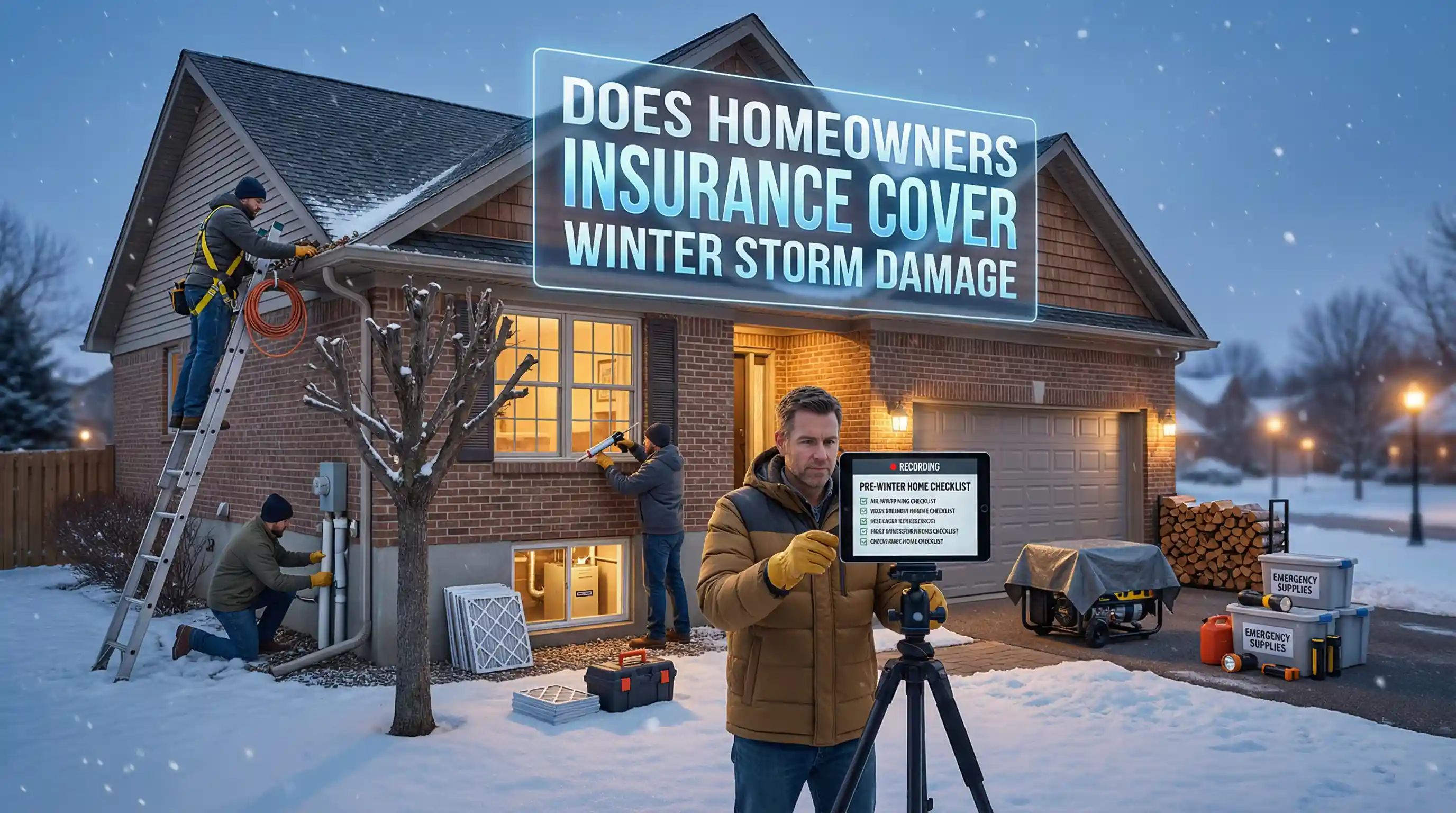
Pre-Winter Checklist for Homeowners
- Inspect your roof: Look for damaged or missing shingles, deteriorated flashing, and clogged gutters.
- Insulate pipes: Especially in attics, crawl spaces, and along exterior walls.
- Seal air leaks: Gaps around windows, doors, and pipes let cold air reach vulnerable areas.
- Service heating system: A functioning furnace is your best defense against frozen pipes.
- Know your shutoff valves: Be able to quickly shut off water if pipes burst.
- Trim trees: Remove dead branches that could fall on your home during ice storms.
- Stock emergency supplies: If power goes out, you’ll need alternative heat sources and flashlights.
- Document your home’s condition: Take photos and video before winter as evidence of pre-storm condition.
The U.S. Department of Energy’s weatherization resources offer free guidance on preparing your home for winter weather—which can also lower your heating bills.
For tips on reducing your insurance costs through home improvements, check out our article on how to lower your homeowners insurance premiums.
Frequently Asked Questions
Does homeowners insurance cover winter storm damage to my fence?
Yes, fences are typically covered under Coverage B (Other Structures) of your homeowners policy. If a winter storm—wind, ice, falling tree—damages or destroys your fence, you can file a claim. However, Coverage B usually has a limit of 10% of your dwelling coverage, which is typically enough for fence repairs or replacement. Keep in mind your deductible applies, so small fence repairs may not be worth claiming.
Are frozen pipes covered if I was on vacation?
It depends on whether you took reasonable precautions. Most policies require you to either maintain adequate heat or shut off and drain the water system when the home will be unoccupied in freezing weather. If you left the heat at 55-60°F and pipes still froze due to extreme cold, you’ll likely be covered. If you turned the heat off completely to save money, your claim will probably be denied for failure to protect the property.
Does homeowners insurance cover the cost to remove snow from my roof?
Generally, no. Snow removal from your roof is considered maintenance, not damage, so it’s your responsibility. However, if heavy snow causes structural damage to your roof, the damage itself is covered. Some policies may cover reasonable snow removal costs if they’re necessary to prevent imminent collapse—but you’d need to document that the removal was an emergency measure to protect the home.
Will my rates increase if I file a winter storm claim?
Possibly, but weather-related claims typically have less impact on rates than liability claims or theft. Some insurers don’t raise rates for a single weather claim, especially if you have a long claims-free history. However, multiple claims within a few years—even for weather—can lead to premium increases or non-renewal. Consider whether small claims are worth filing if the damage only slightly exceeds your deductible.
Does homeowners insurance cover winter storm damage to my car?
No, your homeowners insurance does not cover damage to vehicles. If a tree falls on your car during a winter storm, you’ll need to file a claim under the comprehensive coverage portion of your auto insurance policy. If you only have liability auto coverage, vehicle damage from winter storms is not covered at all.
Final Thoughts: Protecting Yourself Before the Next Storm
So, does homeowners insurance cover winter storm damage? In most cases, yes—but the details matter enormously. The difference between a successful claim and a denial often comes down to documentation, timing, and understanding your policy before you need it.
After fifteen years in the insurance industry, here’s what I tell everyone: read your policy now, while the sun is shining. Know what’s covered and what isn’t. Take photos of your home in good condition. Keep maintenance records. Understand that flood damage requires separate insurance. And if a storm does hit, document everything, report promptly, and don’t accept a denial without fighting back.
I still think about those families I worked with during Winter Storm Uri. The ones who were prepared—who had proper coverage, who documented correctly, who knew their rights—came through okay. The ones who weren’t prepared faced months of stress, financial hardship, and in some cases, years of repair work. I don’t want that for you.
Take an hour this weekend to review your homeowners policy. Check your coverage limits. Make sure you have flood insurance if you’re in a risk area. Take a video walkthrough of your home. These small steps now can save you tens of thousands of dollars when the next winter storm hits.
Ready to Review Your Winter Storm Coverage?
Pull out your homeowners policy today and check your coverage limits, deductibles, and exclusions. If you’re not sure whether you have adequate protection, contact your insurance agent for a policy review before the next storm season arrives.
About the Author
Sarah Mitchell is a licensed insurance adjuster with over 15 years of experience handling property damage claims across the United States. She has personally reviewed thousands of winter storm claims, including extensive work following major winter disasters like Winter Storm Uri, the 2019 Polar Vortex, and numerous Nor’easters.
Sarah became passionate about consumer education after watching too many homeowners lose legitimate claims due to simple, avoidable mistakes. She now focuses on helping homeowners understand their coverage before disasters strike—not after.
Connect with Sarah on LinkedIn and explore official resources from the Insurance Information Institute, FEMA, and the National Association of Insurance Commissioners.
“`